
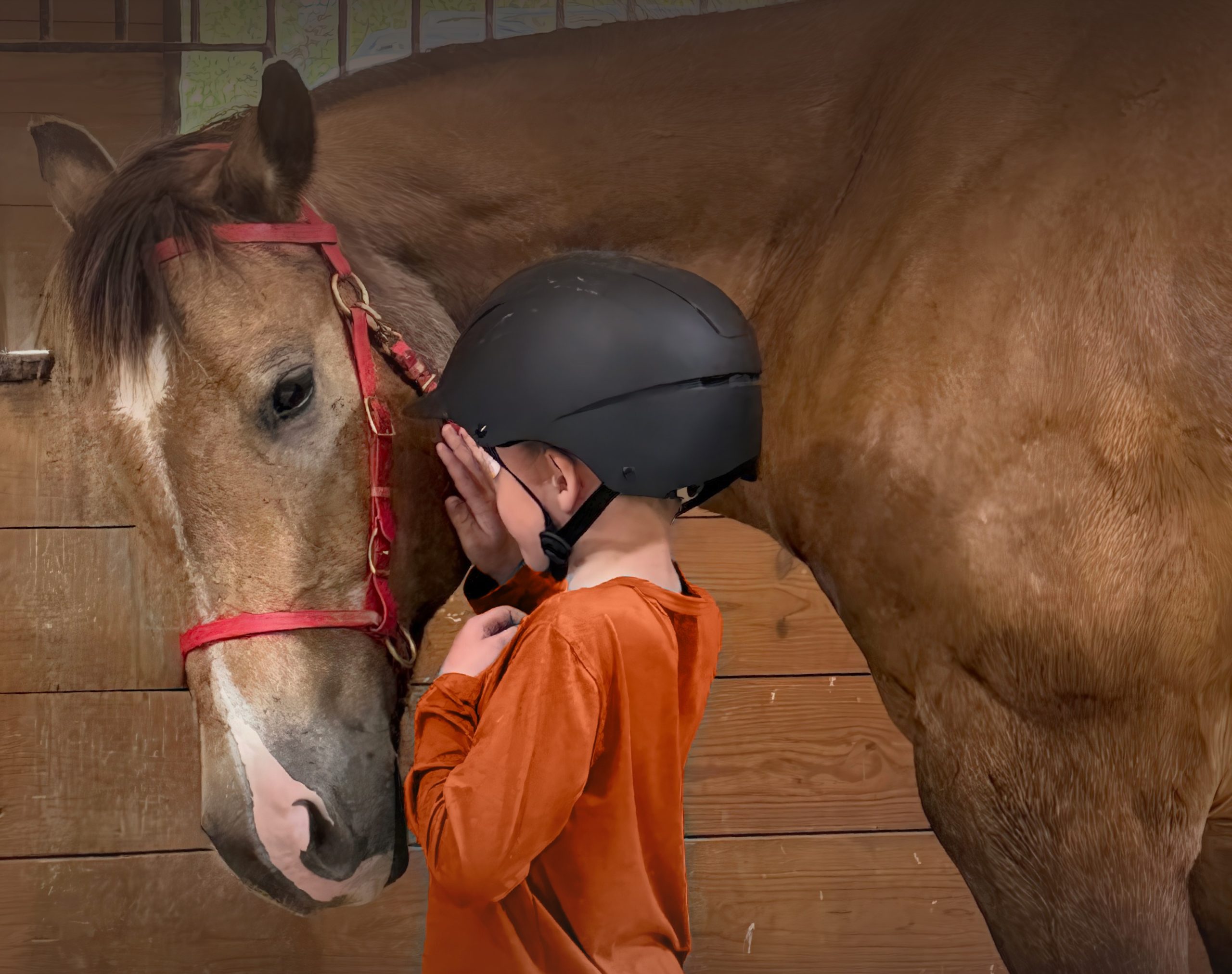
A participant takes a few steps, then looks back. Their equine is still standing where they started. With a little guidance from an Agape instructor, the participant pauses, tries a clearer cue, and waits to see what happens next.
A moment like that can start a conversation. What did you do differently the second time? What did you notice about your animal? Research into how horses respond to people helps explain why these small interactions give us so much to talk about.
Through Equine-Assisted Learning (EAL), participants take part in purposeful activities and guided reflection that help them strengthen communication, develop confidence, and consider how their actions affect others.
What science tells us about how horses respond
People communicate through more than words. Our facial expressions, movements, and sounds also carry information, and research suggests horses can recognize some of these emotional cues.
In a 2019 study, researchers presented horses with human facial expressions alongside nonverbal sounds expressing joy or anger. The horses responded differently depending on the sounds and whether the expressions matched, providing evidence that they can connect emotional information from human faces and voices.
At the barn, paying attention goes both ways. While grooming, a participant might notice their horse shift as the brush moves to a new spot. An instructor can help them look at how the horse is standing, where they’re brushing, and whether it might be a good time to pause.
A connection without the pressure to explain
Connecting with other people sometimes comes with pressure to find the right words. Someone may feel unsure about introducing themselves, discussing a difficult experience, or participating in a group.
An interaction with a horse offers a different starting point. A person can begin by observing, grooming, or simply becoming comfortable nearby, with guidance from Agape’s team.
A horse does not evaluate someone by their job title, diagnosis, age, or ability to tell their story. The interaction takes place in the present, giving participants something immediate to notice and respond to.
That is part of what makes horses valuable, nonjudgmental partners. People can participate without needing to explain everything about themselves first.
How Equine-Assisted Learning builds on that connection
A meaningful interaction becomes a learning opportunity when participants have support in understanding it. At Agape, instructors plan activities around a group’s goals and help participants connect their experiences with everyday situations.
For example, leading a horse can provide an opportunity to practice clear communication. Working through a group challenge can encourage listening and cooperation. In another scenario, one person might reach for a brush right away. Another might hang back until someone mentions the pony they rode as a kid. Soon the conversation can wander from horses to family pets to places people haven’t thought about in years. Even someone who’d rather watch from their favorite chair has a way to join in. Grooming can also introduce conversations about care, personal space, and boundaries.
Depending on the activity and participants’ goals, these experiences may create opportunities to practice:
- Communication: Considering how actions and body language contribute to a message.
- Confidence: Trying an unfamiliar task and recognizing progress.
- Awareness: Paying attention to personal reactions and another living being’s signals.
- Cooperation: Listening, adjusting, and working toward a shared goal.
Afterward, an instructor might ask what helped the group get moving again or how they knew it was time to slow down. A participant who paused to give their horse more space might think of a time when a friend could use a moment, too.
Turning an experience into everyday understanding
The science of how horses perceive human cues helps explain one part of the connection. What participants learn also depends on the activity, their goals, and the guidance they receive.
A moment of uncertainty can become a chance to ask for help. An activity that takes several attempts can open a conversation about patience. Noticing a horse’s need for space can make boundaries easier to discuss.
Progress may begin with something small: participating in a conversation, trying again after a setback, or recognizing a need to pause before responding.
Help make more moments possible
For 40 years, Agape has brought people and horses together to cultivate unbridled hope. Your support helps make more of these moments possible, from a participant finding the confidence to speak up at the barn during therapeutic riding, to neighbors sharing a story during a Mobile Mini Visit.
Through Equine-Assisted Learning and other Equine-Assisted Services, participants can find opportunities to communicate, build confidence, and engage with others in meaningful ways.